News & Science Highlights

FeaturedScience

Breaking a quantum computing bottleneck

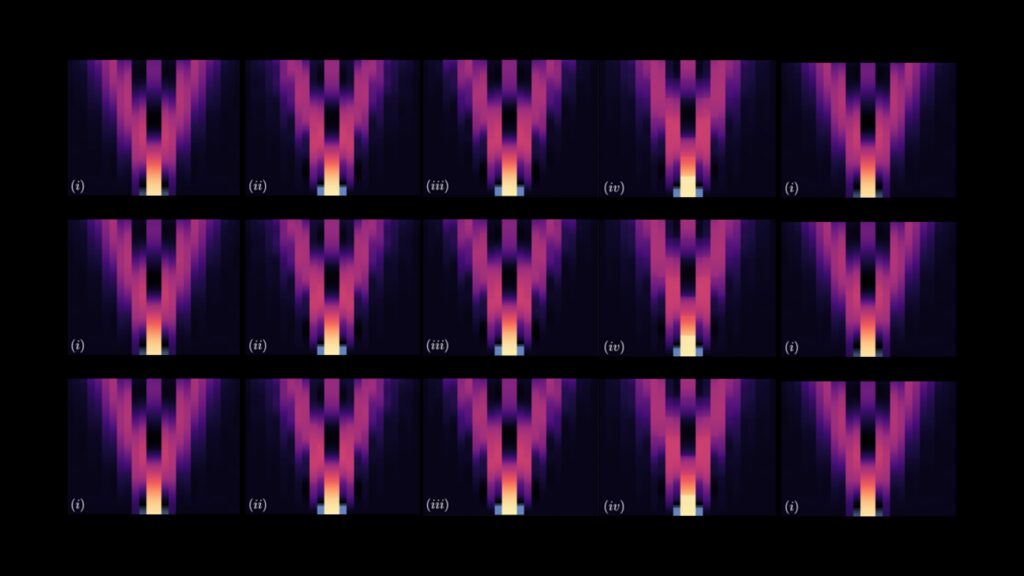
Researchers at the Department of Energy’s Oak Ridge National Laboratory used the world’s fastest supercomputer for open science to develop a quantum algorithm that could lead to more advanced models in fluid dynamics and other scientific fields. The results of the study, supported by the Oak Ridge Leadership Computing Facility’s…
Matt Lakin
September 29, 2026
federated learning ornlFeaturedTechnology

Securing Cross-Facility Model Training

After successfully completing an intercontinental demonstration of federated learning, the Oak Ridge Leadership Computing Facility is preparing to offer the collaborative capability to its users. Federated learning will allow researchers to train SI models across multiple institutions at different locations, and each institution will be able to contribute its own…
Coury Turczyn
September 15, 2026
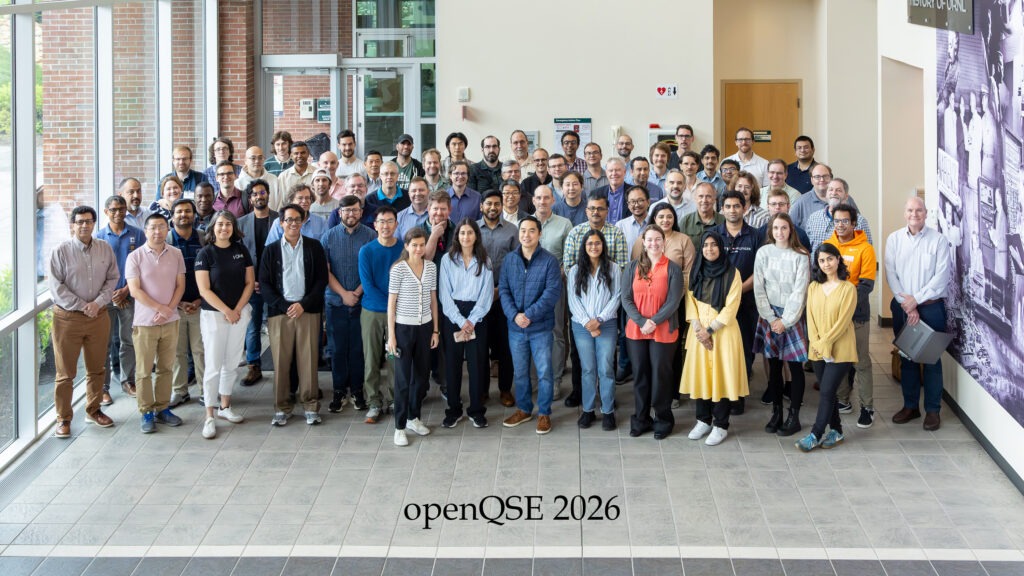
A group of people standing in a hallway behind the words OpenQSE 2026FeaturedScience

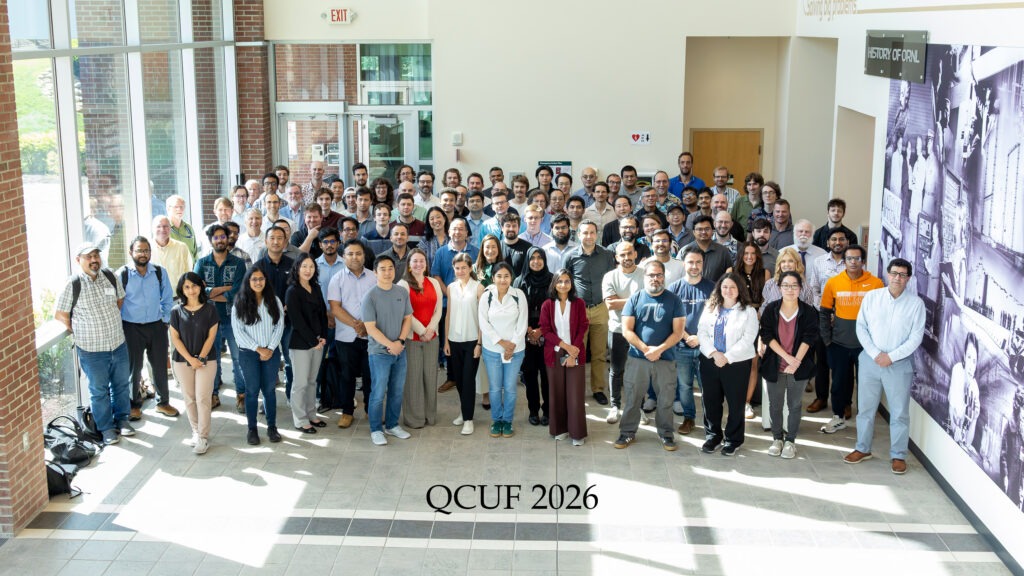
OpenQSE Workshop Advances Hybrid Quantum-HPC Software Ecosystem

Researchers collaborated at the second annual Open Quantum-HPC Software Ecosystem (OpenQSE) workshop at the Department of Energy’s (DOE) Oak Ridge National Laboratory (ORNL) to advance the open-source OpenQSE framework, which is designed to bridge quantum computing and classical high-performance computing (HPC). Held on the final day of the 2026 Quantum…
Angela Gosnell
August 24, 2026
FeaturedTechnology

ORNL Deploys New IQM Quantum Computer

With its acquisition of an on-site 20-qubit IQM Radiance quantum computer, the Department of Energy’s Oak Ridge National Laboratory has taken another major stride forward in its research efforts to integrate quantum computing technology with classical high-performance computing (HPC). The new system, named Pathfinder, was launched June 16 in the…
Coury Turczyn
July 8, 2026
FeaturedScience

Oak Ridge National Laboratory, Cleveland Clinic model chemistry of fusion reactor material

by Rafi Letzter, IBM https://youtu.be/4I8GwLeplso?si=0bKJ9NHXz8F1UDdi A team of scientists from Oak Ridge National Laboratory (ORNL), Cleveland Clinic and IBM (NYSE: IBM), have calculated nine molecular configurations of a promising material to produce fuel for fusion energy – the first-known instance of such computations on quantum computers. Such calculations, demonstrated in a…
Katie Bethea
July 7, 2026
Science

Keeping Open-Source Software Open

National Center for Computational Sciences teams turned out to support the High Performance Software Foundation’s second annual conference on March 19-20 in Chicago. The organization, founded in 2024 as part of the nonprofit Linux Foundation, works to lower barriers to productive use of existing and future high-performance computing (HPC) systems.…
Matt Lakin
May 27, 2026
FeaturedScience

INCITE 2027 Call for Proposals

The U.S. Department of Energy’s (DOE) Innovative and Novel Computational Impact on Theory and Experiment (INCITE) program is now accepting proposals for high-impact, computationally intensive research campaigns in a broad array of science, engineering, and computer science domains. Proposals must be submitted by June 15, 2026. Open to researchers from…
Katie Bethea
April 21, 2026
FeaturedScience

Cracking the Hadron Collision Puzzle

Researchers used quantum simulations to model the collisions of subatomic particles and open new avenues to understand the basics of hadron collisions, a key aspect of high-energy physics. The results illustrate quantum computing’s potential to expand the range of solutions to scientific problems beyond those made possible by classical high-performance…
Matt Lakin
April 21, 2026
FeaturedScience

Tag-Teaming Turbulence

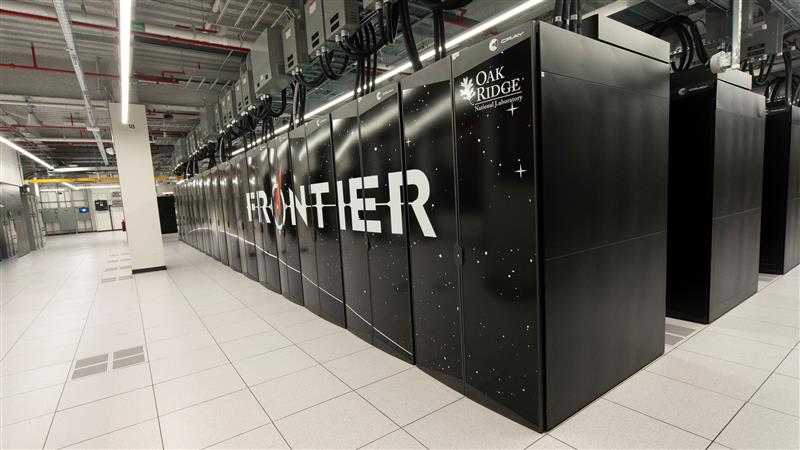
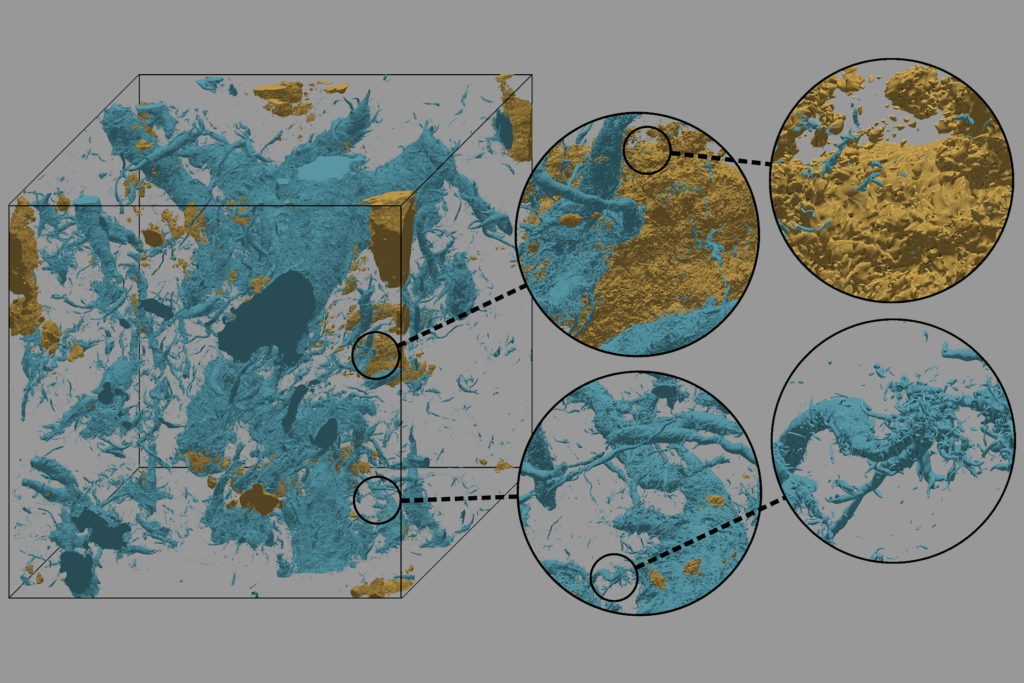
Researchers used the world’s fastest supercomputer for open science to train an artificial intelligence model that captures magnetic turbulence within a plasma in unprecedented detail. Results from the model, trained on the Frontier supercomputer at the Department of Energy’s Oak Ridge National Laboratory, could support research ranging from modeling a supernova to building the…
Matt Lakin
April 20, 2026
FeaturedScience

Nanodiamonds and Beyond: Designing Carbon Materials with Artificial Intelligence at Exascale

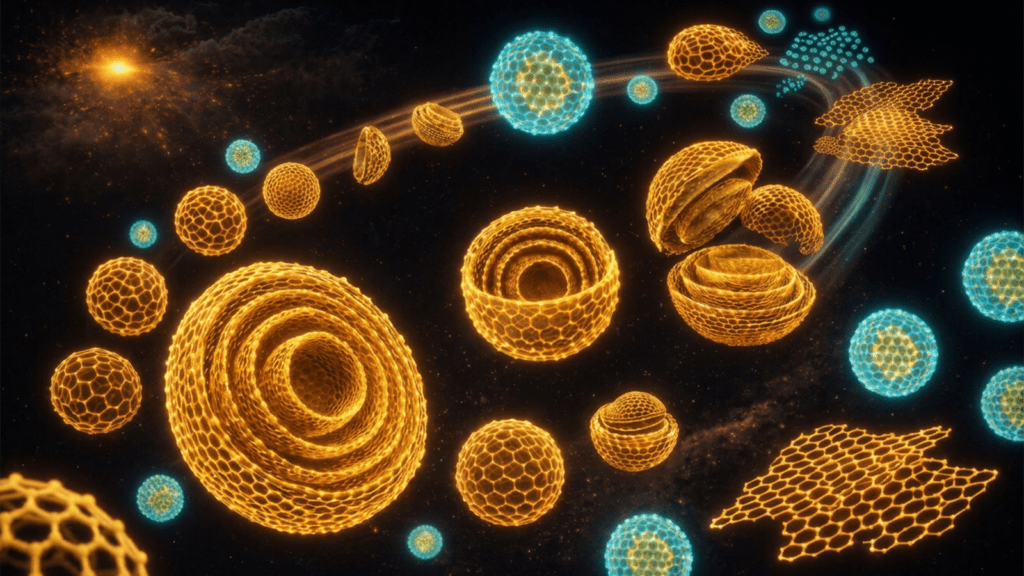
by Argonne National Laboratory   Key Takeaways Carbon is one of nature’s most versatile elements, capable of forming materials that are stronger than steel, lighter than plastic and adaptable to countless applications. Using powerful supercomputers and artificial intelligence and drawing on expertise in multiple disciplines, Argonne scientists are learning to…
Katie Bethea
March 16, 2026