National Center for Computational Sciences teams turned out to support the High Performance Software Foundation’s second annual conference on March 19-20 in Chicago.
The organization, founded in 2024 as part of the nonprofit Linux Foundation, works to lower barriers to productive use of existing and future high-performance computing (HPC) systems. The HPSF serves as a neutral hub that enables industry, government agencies and academia to collaborate on open-source scientific software for HPC.
“For our group, this is the most important conference of the year,” said Fernando Posada Correa, who leads the NCCS System Acceptance and User Environment Group at the Department of Energy’s Oak Ridge National Laboratory (ORNL). “It’s a chance to compare notes with our colleagues and trade insights on emerging trends in the field.”
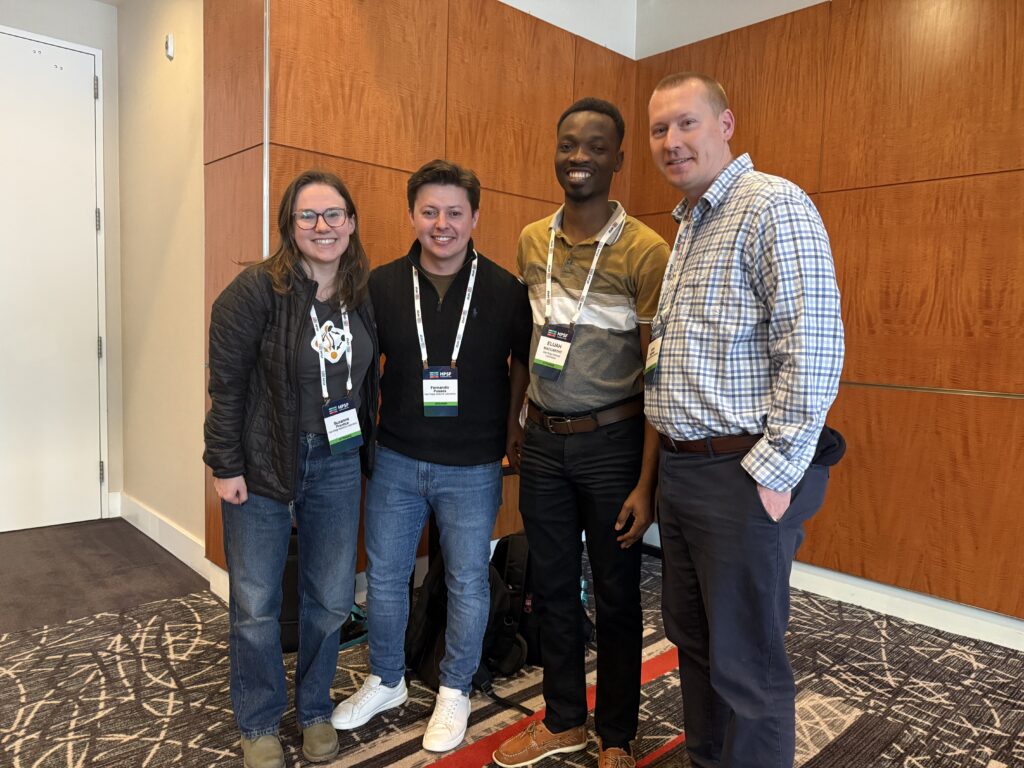
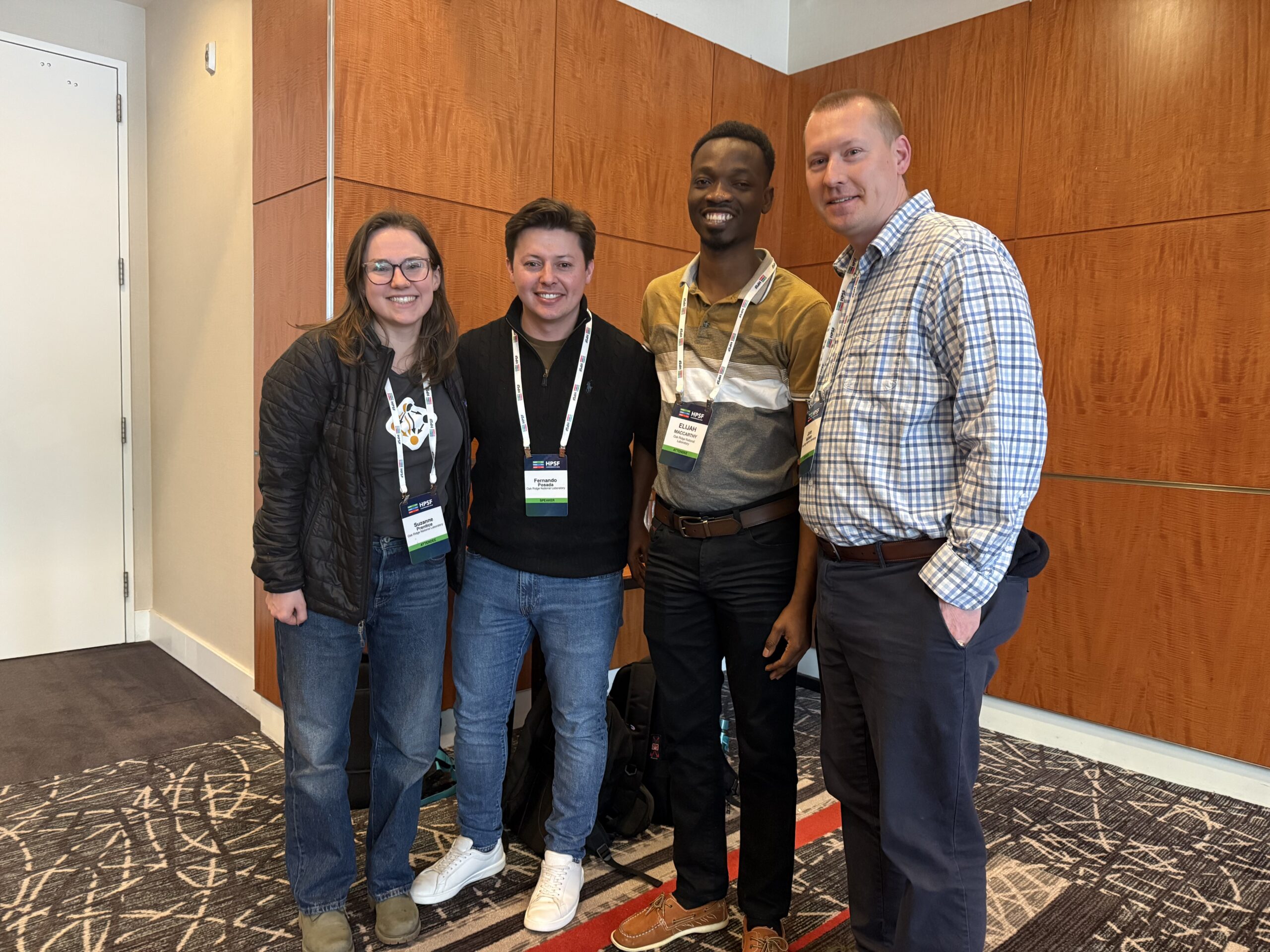
Members of the National Center for Computational Sciences’ System Acceptance and User Environment Group supported the second annual High Performance Software Foundation conference March 19-20, 2026, in Chicago.
Credit: Fernando Posada Correa, ORNL
Posada Correa’s group ensures the functionality, performance and usability of new NCCS systems to guarantee software and other elements meet ORNL’s robust standards for research applications. The group supported the launch of Frontier, the world’s first exascale supercomputing system, and will do the same for Frontier’s successor, Discovery, set to arrive in 2028.
“Our entire scope of work revolves around supporting scientific users through the software environment, so we’re always interested to hear from our users and from our counterparts at other institutions about how we can make these systems operate more effectively,” Posada Correa said.
Contributions from the ORNL team this year included a talk by Posada Correa and Elijah Maccarthy on software provisioning workflows and a panel discussion co-led by John Holmen on teaching and training.
Posada Correa said he expects the foundation’s work to become more visible with the rise of AI models and as the burden to maintain open-source software systems increasingly shifts to chip manufacturers and users.
“Technology and the business are changing fast,” he said. “That’s the reason this foundation and its partners like the national labs exist. So now more than ever, I think efforts to collaborate to maintain open-source technologies are going to become more and more relevant.”
UT-Battelle manages ORNL for DOE’s Office of Science, the single largest supporter of basic research in the physical sciences in the United States. DOE’s Office of Science is working to address some of the most pressing challenges of our time. For more information, visit https://energy.gov/science.