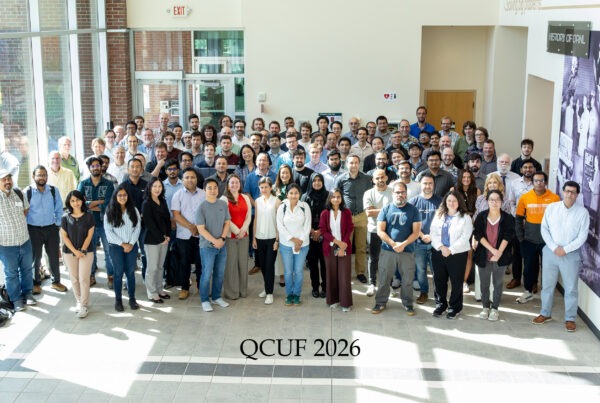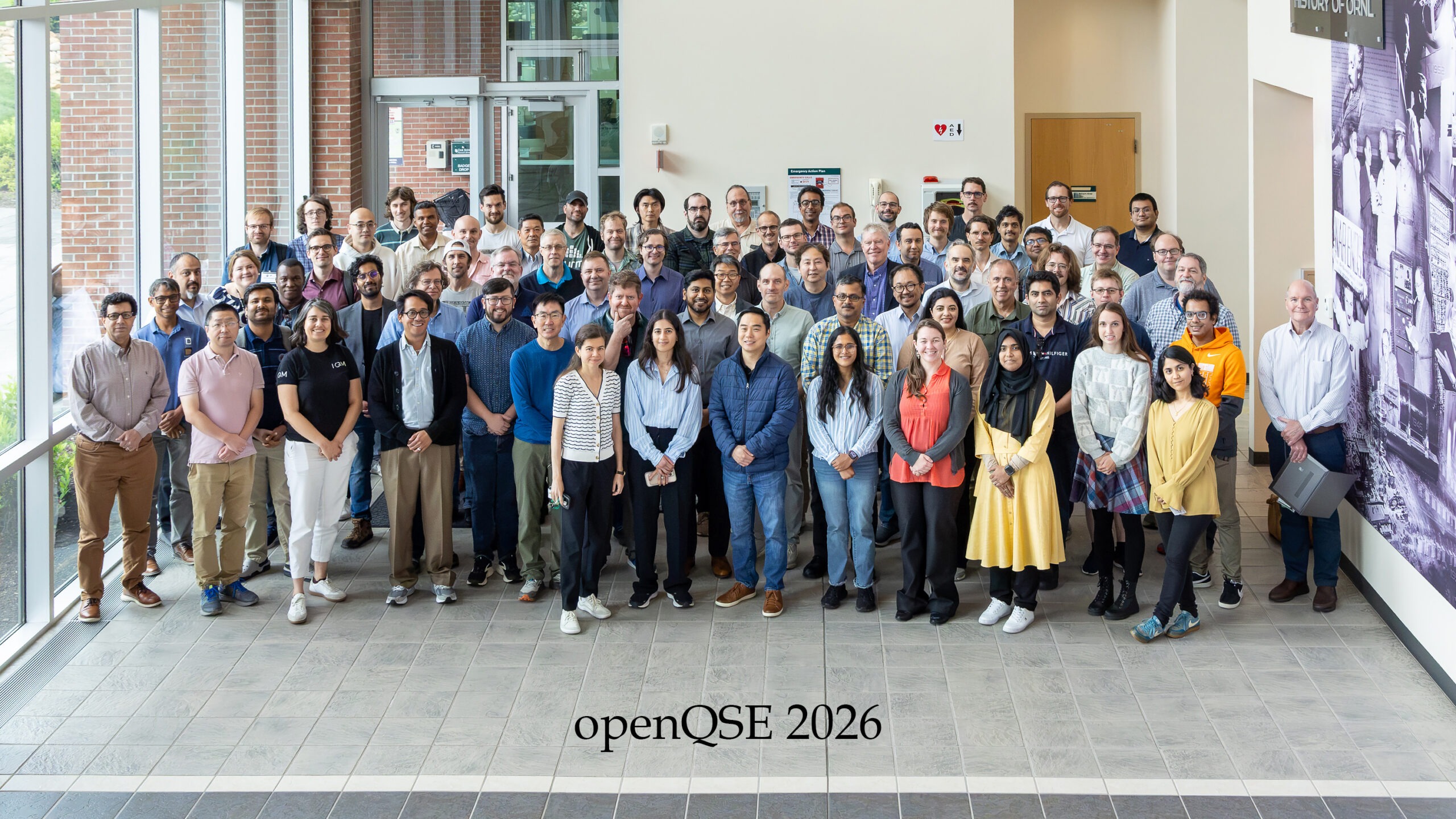
Researchers collaborated at the second annual Open Quantum-HPC Software Ecosystem (OpenQSE) workshop at the Department of Energy’s (DOE) Oak Ridge National Laboratory (ORNL) to advance the open-source OpenQSE framework, which is designed to bridge quantum computing and classical high-performance computing (HPC). Held on the final day of the 2026 Quantum Computing User Forum, the event focused on developing the software infrastructure needed to support hybrid quantum-HPC (QHPC) computing.
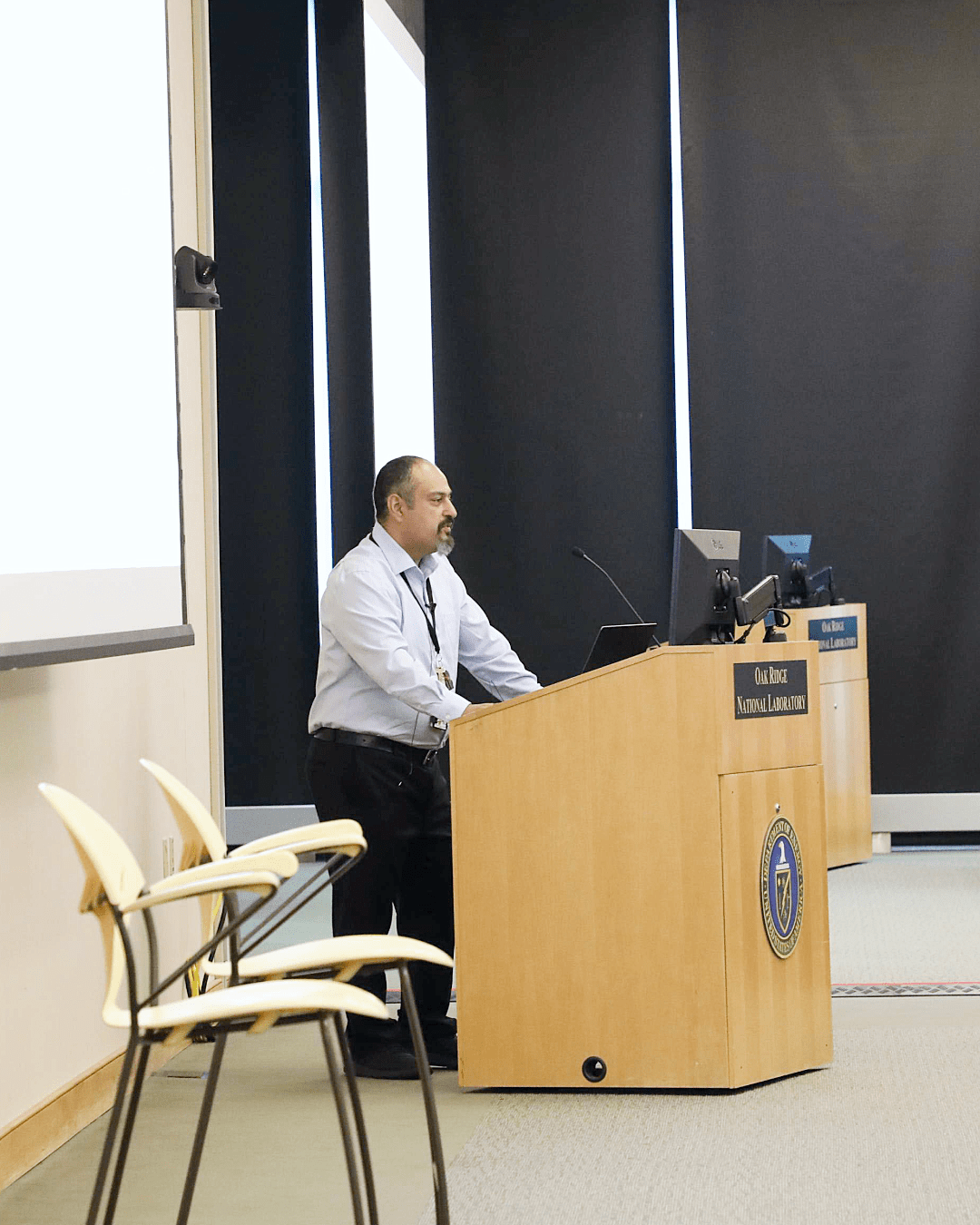
Amir Shehata, an HPC systems software engineer at ORNL, led the OpenQSE workshop on the final day of the Quantum Computing User Forum. Credit: Alonda Hines/ORNL, U.S. Dept. of Energy
Amir Shehata, an HPC systems software engineer at ORNL, led the workshop, bringing together leaders from industry, academia and national laboratories to advance OpenQSE, a community-driven initiative to develop open, vendor-neutral software that can work across technologies and systems from different companies for QHPC. By defining common software interfaces and interoperability standards, the initiative aims to make it easier for researchers to develop applications that run across diverse quantum and HPC platforms, accelerating scientific discovery through an open ecosystem.
What began as conversations during a workshop at the Quantum Computing User Forum last year has evolved into a year-round international collaboration focused on solving one of quantum computing’s biggest challenges: building the software needed to connect rapidly evolving quantum hardware with mature HPC systems.
“Last year, we were just starting to explore this space,” Shehata said. “Now we’ve broken the problem into specific areas, formed working groups and started developing actual implementations. We’re no longer just discussing what needs to be done. We’re defining deliverables and building the software ecosystem.”
Unlike last year’s workshop, which focused primarily on identifying challenges, this year’s event centered on establishing six technical working groups responsible for key components of the quantum-HPC software stack, including compilers, resource interfaces, system architecture, software architecture, application runtimes and control electronics. Throughout the day, participants refined each group’s charter, identified technical priorities and established milestones to guide development over the coming year.
“Discussions are good, but if they’re not paired with concrete deliverables, they’ll remain discussions,” Shehata said. “Our goal was for every working group to leave with a clear mission, defined responsibilities and actionable milestones that will drive progress between now and next year’s workshop.”
From Collaboration to Implementation
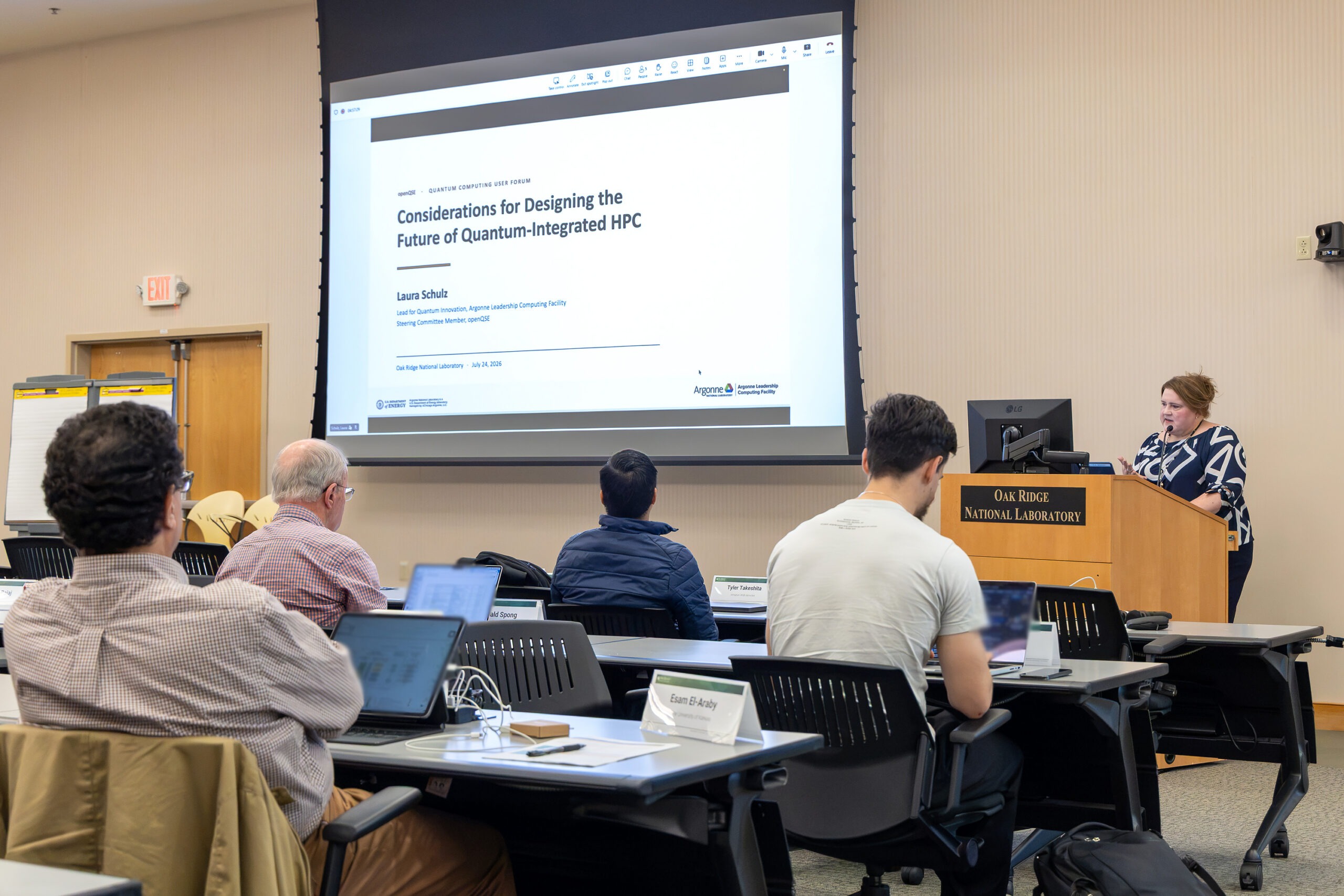
July 24, 2026 — Laura Schulz, Lead for Quantum Innovation at the Argonne Leadership Computing Facility and Steering Committee Member for openQSE, presents “Considerations for Designing the Future of Quantum-Integrated HPC” during the Open Quantum-HPC Software Ecosystem (openQSE) conference at Oak Ridge National Laboratory. Credit: Alonda Hines/ORNL, U.S. Dept. of Energy
One of the workshop’s defining strengths was its collaborative approach. Rather than relying on a single organization to guide the effort, technical sessions were organized and led by experts from across the quantum computing landscape. Contributors from companies including IBM, Hewlett Packard Enterprise, AWS, Alice & Bob and Qblox worked alongside researchers from ORNL, other national laboratories and universities to tackle shared software challenges.
One example of that collaboration is NVIDIA’s work within OpenQSE on Hierarchical Resource Scheduling (HRES) for the Slurm workload manager, helping align hybrid quantum resources with established HPC scheduling workflows. HRES extends Slurm’s resource model to represent and manage heterogeneous resources, providing a path for quantum resources to be requested and scheduled alongside traditional HPC resources using established Slurm workflows.
“People aren’t just talking — they’re committing to doing the work throughout the year,” Shehata said.
At its core, OpenQSE seeks to combine the abilities of two powerful computing paradigms: quantum computing and HPC. While advances in quantum hardware continue, Shehata said equally important progress must occur throughout the software stack that connects quantum processors with leadership-class supercomputers.
“You won’t solve scientifically interesting problems with hardware alone,” Shehata said. “To discover new materials, new drugs or tackle other complex scientific challenges, you need hardware and software working together. OpenQSE is focused on building that software foundation.”
The workshop also highlighted ORNL’s leadership in advancing hybrid computing through open collaboration. Home to the Oak Ridge Leadership Computing Facility (OLCF) and the Quantum Computing User Program, ORNL provides researchers access to world-leading computing resources while helping develop the software ecosystem needed to integrate emerging quantum technologies into scientific workflows.
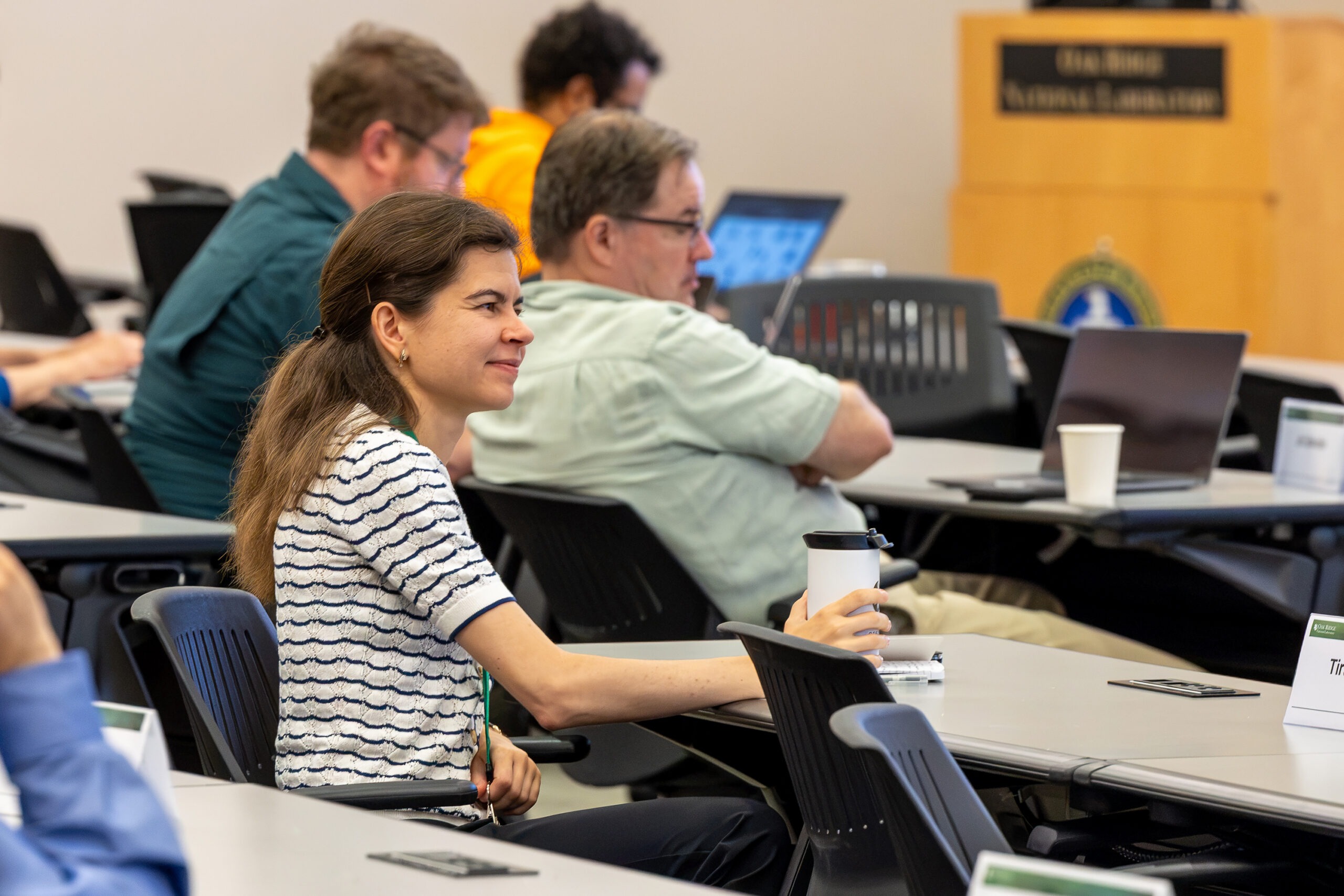
July 24, 2026 — An attendee listens to a presentation during the Open Quantum-HPC Software Ecosystem (openQSE) conference at Oak Ridge National Laboratory. Credit: Alonda Hines/ORNL, U.S. Dept. of Energy
Rather than limiting collaboration to an annual workshop, OpenQSE participants now meet weekly or biweekly within their technical working groups, with plans to add quarterly meetings that alternate between virtual and in-person sessions. The expanded schedule reflects both the complexity of the work and the consortium’s commitment to sustained collaboration.
“The problems we’re trying to solve are complicated enough that one day a year is just not enough,” Shehata said. “We need regular opportunities to sit together, work through technical challenges and build solutions as a community.”
As the initiative continues to grow, organizers also hope to expand participation by engaging universities, students and open-source software developers from around the world, broadening the community contributing to next-generation quantum software. Through OpenQSE, researchers are building not only the software needed for tomorrow’s hybrid computing systems but also the collaborative foundation needed to accelerate scientific discovery for years to come.
OLCF is a DOE Office of Science user facility at ORNL that is supported by DOE’s Advanced Scientific Computing Research program.
UT-Battelle manages ORNL for DOE’s Office of Science, the nation’s largest supporter of basic research in the physical sciences. The Office of Science is working to address some of the most pressing challenges of our time. Learn more at energy.gov/science.