In 2025, high-performance computing and rapid advances in artificial intelligence pushed the boundaries of scientific discovery, accelerating progress across a wide spectrum of disciplines. Deep collaborations among leading academic, industrial, and government partners fueled major breakthroughs in areas such as simulating cellular machinery, accelerating AI, integrating quantum and classical computing and next-generation fusion design. Breakthrough studies gained acclaim at major international conferences, highlighting the profound influence of these innovations on the trajectory of science and technology. With 2026 on the horizon, the extraordinary momentum built this year is propelling the next wave of transformative advances.
Simulating Cellular Machinery
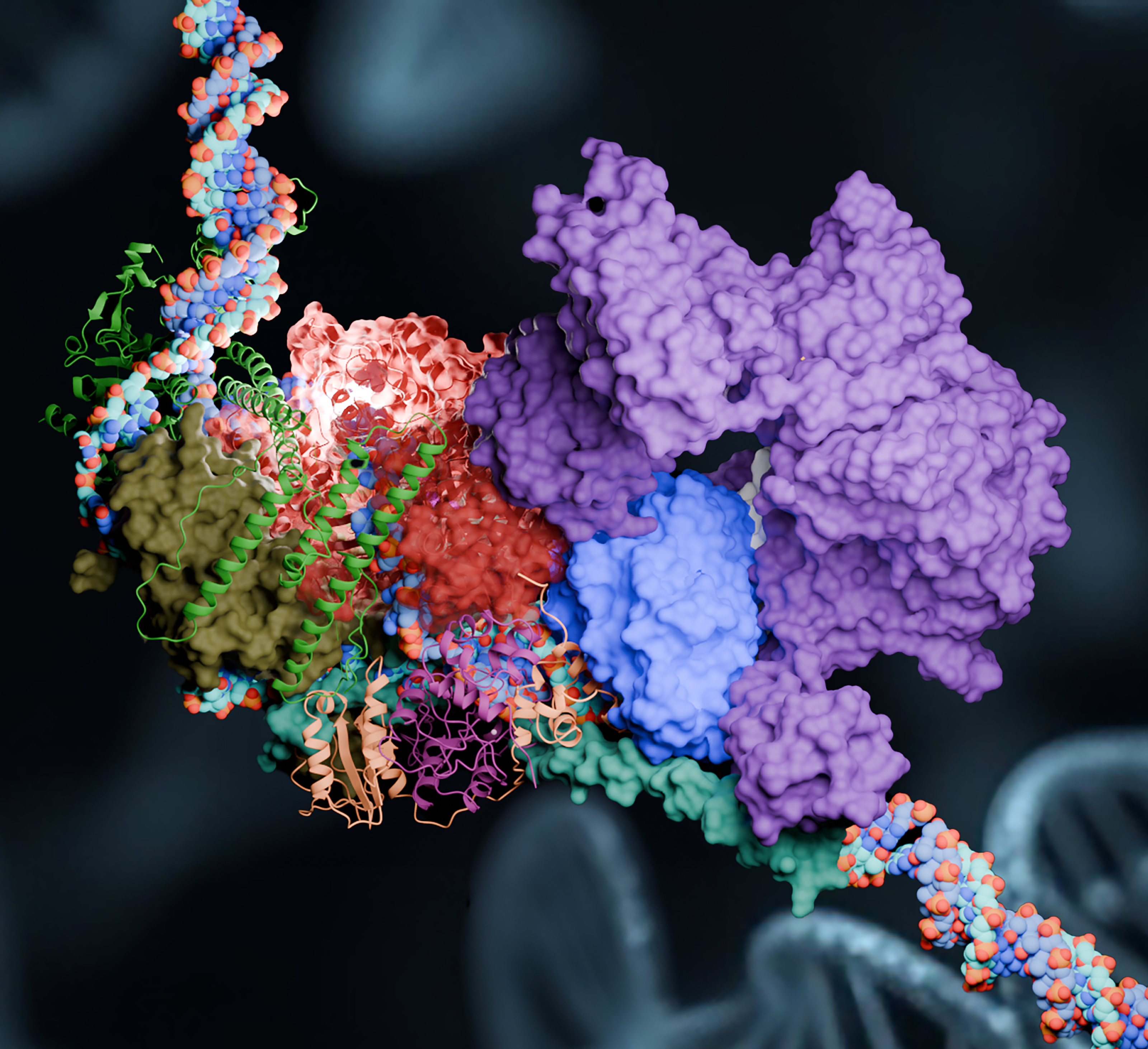
The Summit supercomputer revealed how damaged strands of DNA are surgically repaired by a molecular pathway called nucleotide excision repair, or NER. NER’s protein components can change shape to perform different functions of repair on broken strands of DNA (blue and red helix). Credit: Tanmoy Paul, Georgia State University
Researchers at Georgia State University used ORNL’s Summit supercomputer to study how the body repairs DNA damaged by UV exposure, tobacco smoke, and other carcinogens. Focusing on nucleotide excision repair (NER), they created a detailed model of the pre-incision complex (PInC), which guides the precise removal of damaged DNA. Published in Nature Communications, their work clarifies the roles of key proteins like XPC, TFIIH, and PInC, offering insights that could inform new therapies and disease prevention.
Strengthening Carbon Fiber
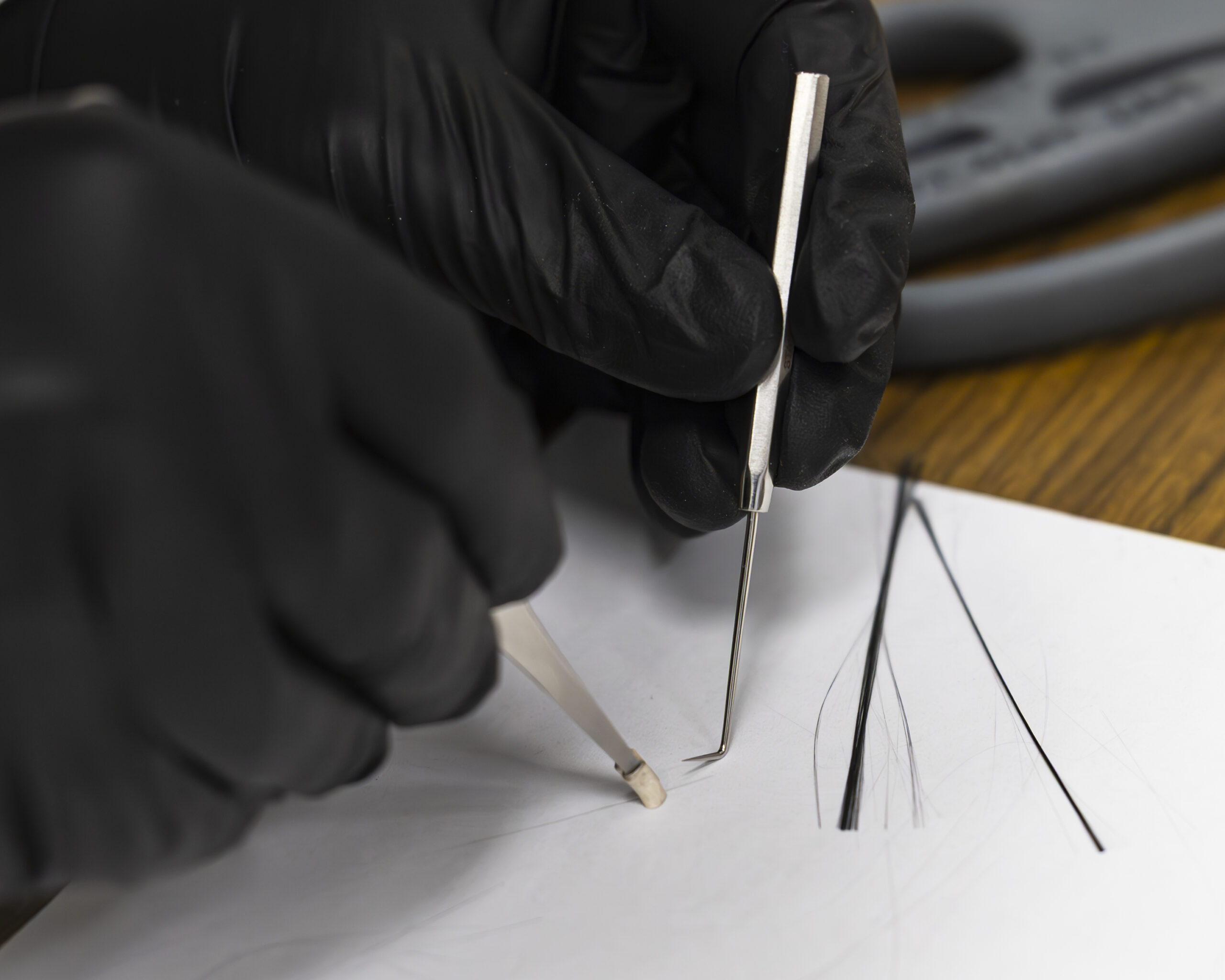
ORNL researchers found a way to double the tensile strength of carbon-fiber composites by reinforcing the material with a thin layer of PAN nanofibers. A human hair is approximately 100 times wider than one of these fibers. Credit: Carlos Jones/ORNL, U.S. Dept. of Energy
ORNL Scientists uncovered a way to make carbon-fiber composites even stronger by adding a thin reinforced layer of nanofibers at the interface between carbon fibers and the surrounding polymer, redirecting stress and improving overall durability. Using ORNL’s Frontier, researchers simulated 5 million atoms to study this reinforcement process at unprecedented molecular detail, far beyond the capability of typical computing clusters. The work demonstrates how leadership-class supercomputing can accelerate the design of ultralight, ultra-strong materials while reducing the cost and time required for physical testing.
Modeling the Dynamics inside Neutron Stars
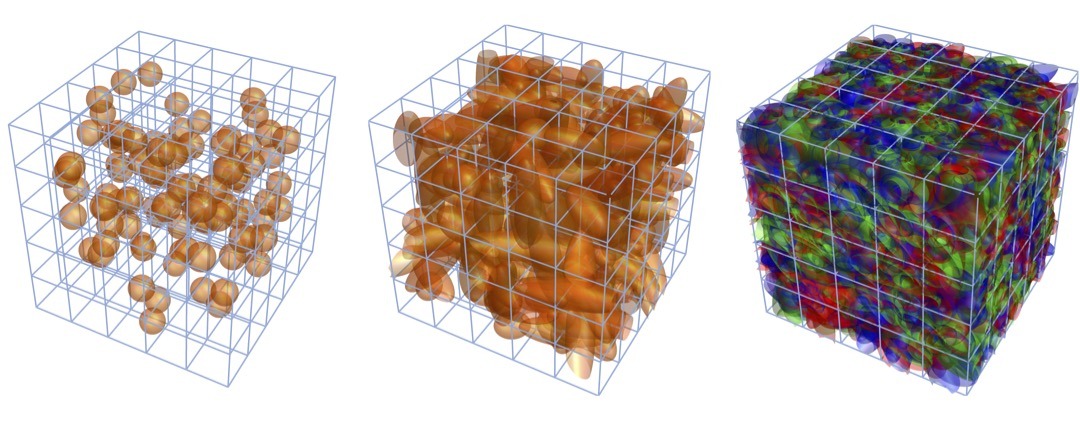
A team of researchers from the Massachusetts Institute of Technology used Frontier to chart the isospin density of a neutron star over a range of conditions. This illustration depicts isospin-dense matter at three increasing densities from left to right. Because neutron stars have abundant neutrons, they have a nonzero isospin density. This is important for understanding the properties of the matter within the star. Image: William Detmold/MIT
Physicists used ORNL’s Frontier supercomputer to gain new insight into the extreme inner conditions of neutron stars—objects so dense that just a few cubic centimeters of their matter would outweigh the entire human population. Because these stars cannot be replicated in laboratories and are too distant to observe in detail, a research team from MIT turned to large-scale lattice QCD simulations to predict how pressure and density interact inside them, a crucial step toward determining their long-mysterious equation of state. Running nearly continuously for eight months, Frontier’s exascale computing power enabled the team to model unprecedented particle systems, map how isospin density affects neutron-star matter, and develop a new algorithm to efficiently analyze massive quark-gluon configurations.
Facilitating Advanced HPC Education
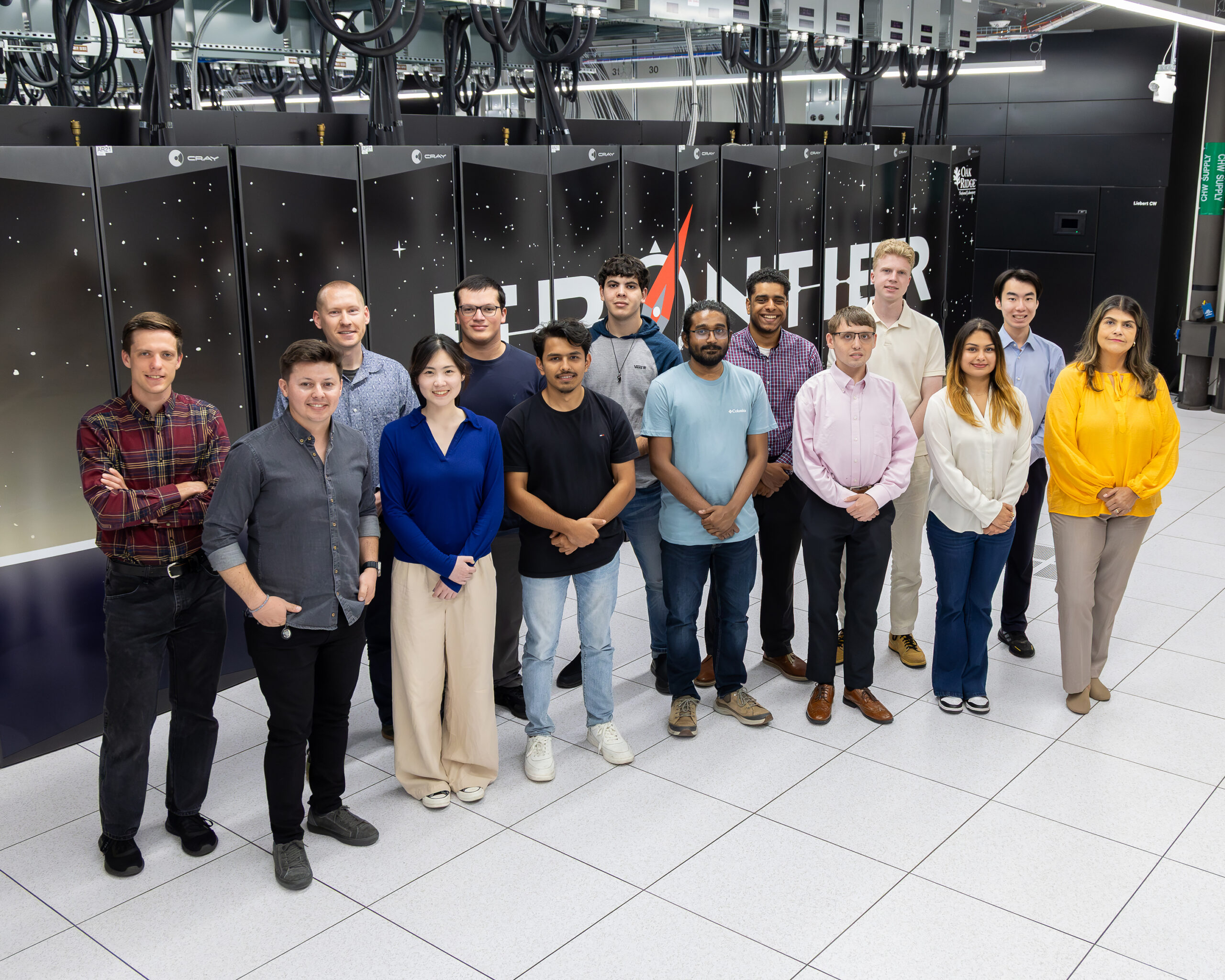
This year’s PCIP interns and ORCA mentors, from left: ORCA Mentors Asa Rentschler, Fernando Posada, John Holmen; Students Yiwen Chen, Carlos Delgado Vega, Bimarsh Bhusal, Estaben Rodriguez Denis, Adib Kabir, Adham Abrahim, Carter Gatland, Yaroslav Petrashko, Sheryl Arya, Jingran Huang, and Eliana Valenzuela Andrade. Credit: Alonda Hines, ORNL, U.S. Dept. of Energy
The Oak Ridge Leadership Computing Facility moved forward on plans for the Oak Ridge Computing Academy (ORCA) starting in June 2026, a hands-on training program designed to address the shortage of expertise in high-performance computing system administration. Building on a successful pilot with students from the Pathways to Computing Internship Program, ORCA will teach participants—from students to professionals—how to build, configure, and operate an HPC cluster from the ground up. The program aims to fill a gap in traditional HPC education, which often emphasizes programming over system operations.
Integrating Quantum and Classical Computing
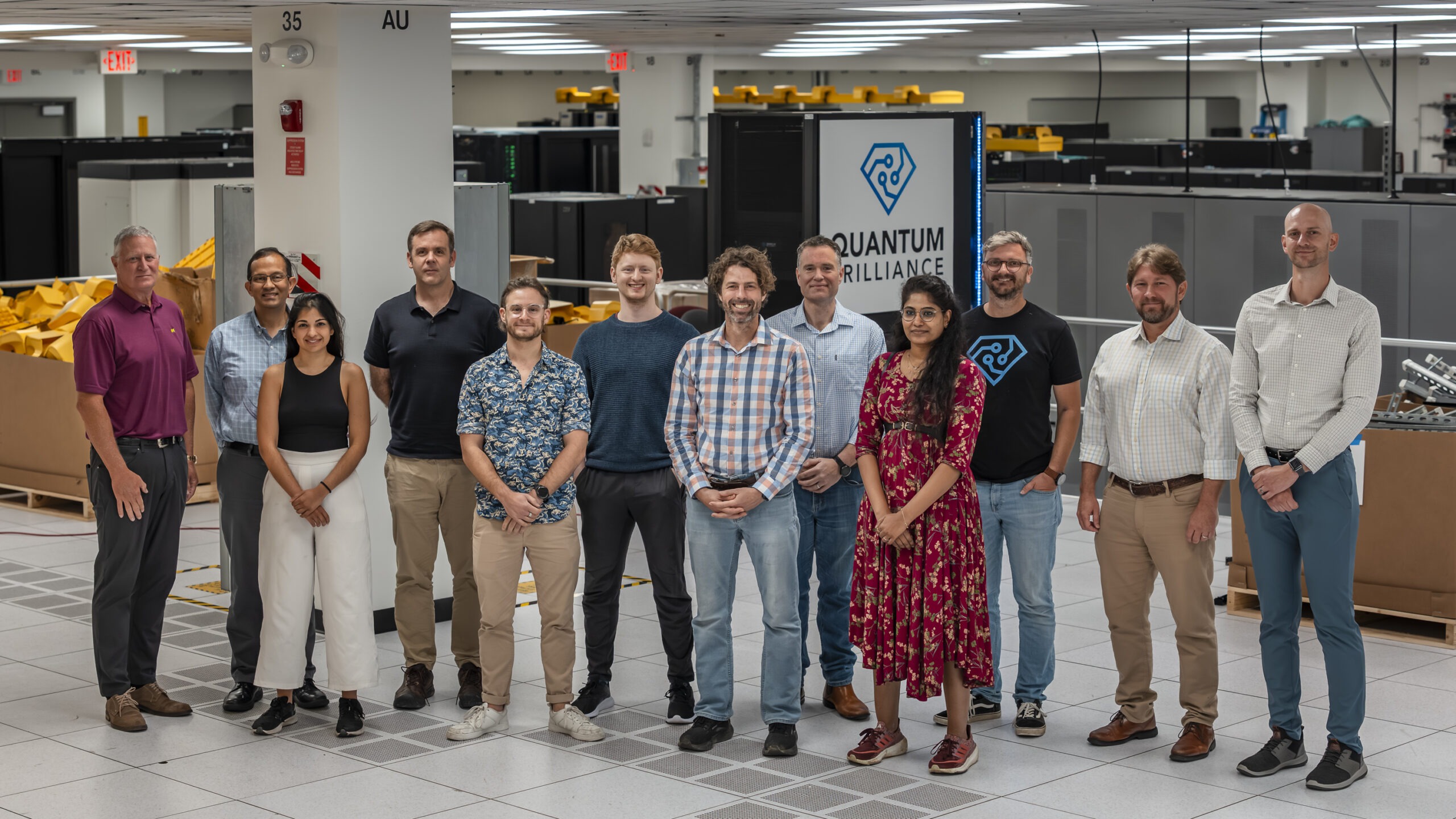
ORNL’s first on-site, commercial quantum computer cluster will be used by OLCF staff to explore ways to integrate this emerging technology into classical high-performance computing ecosystems.
Oak Ridge National Laboratory, in partnership with Quantum Brilliance, installed its first on-site commercial quantum computer cluster at the Oak Ridge Leadership Computing Facility, marking a major step toward integrating quantum technology into high-performance computing. The new system, featuring room-temperature diamond-based quantum processing units, will allow researchers to explore hybrid quantum–classical workflows, test parallelized quantum algorithms, and develop the practical mechanics of co-scheduling, performance tuning, and workflow orchestration. This collaboration supports ORNL’s strategy for next-generation leadership computing and reflects a broader vision for scaling quantum devices alongside traditional CPUs and GPUs.
Winning the R&D 100 Award
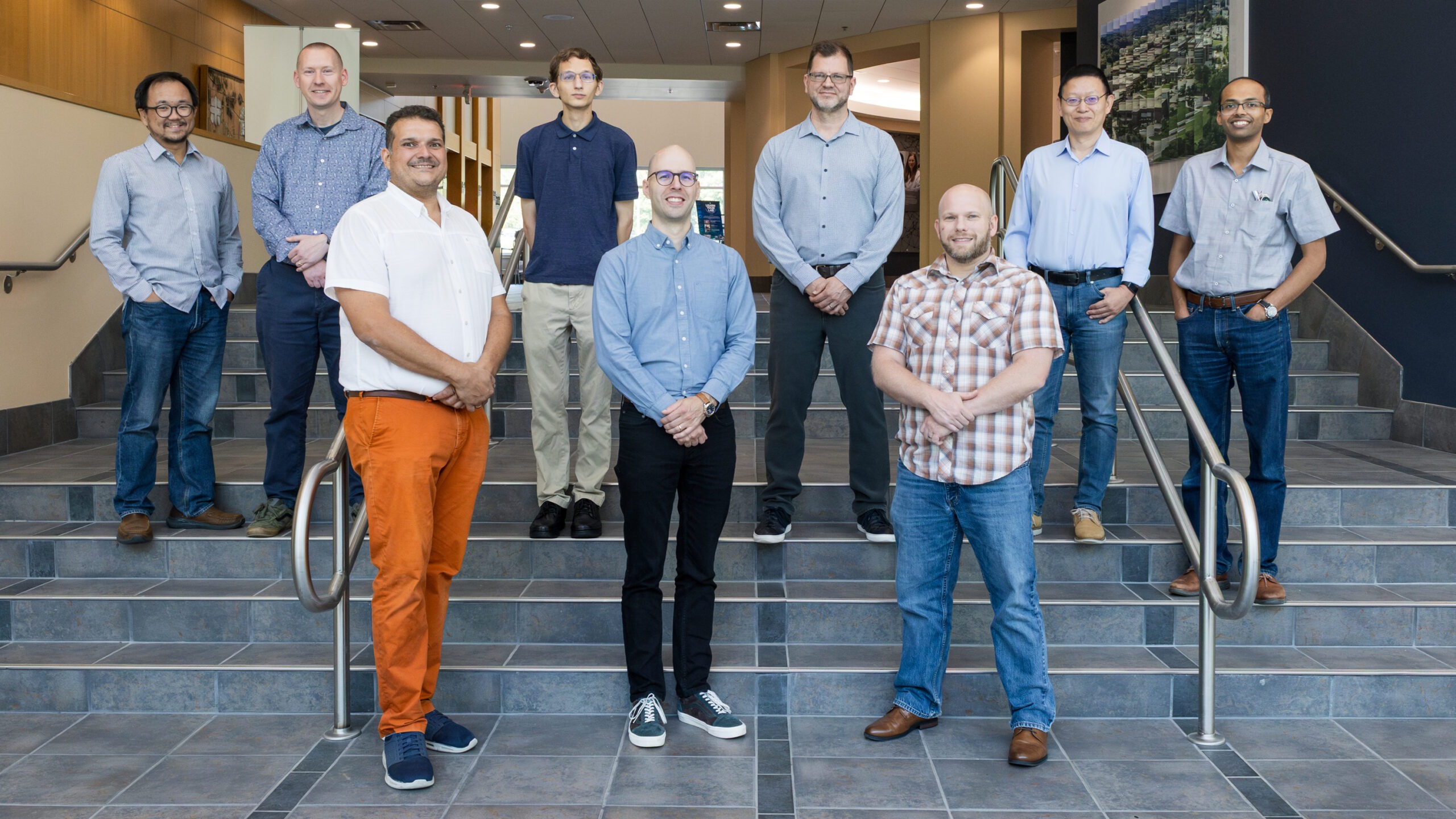
Members of the ExaDigiT team, left to right: Jesse Hines, Matthias Maiterth, Wes Brewer, Feiyi Wang, Vineet Kumar, John Holmen, Rafal Wojda, Scott Greenwood, Woong Shin. Credit: Cindi Zdrinc/Oak Ridge National Laboratory
A research team led by the Oak Ridge Leadership Computing Facility at ORNL won an R&D 100 Award for ExaDigiT, the first fully integrated digital twin framework capable of modeling entire supercomputing data centers in near–real time. Developed with Hewlett Packard Enterprise, ExaDigiT unifies models of workloads, power, cooling, and network behavior into an interactive dashboard that enables optimization, virtual prototyping, and what-if analysis at unprecedented scale. By tracking every component down to individual CPUs and GPUs and simulating how cooling and power demands interact, the tool helps researchers reduce bottlenecks and improve performance.
Speeding Up Power Plant Design
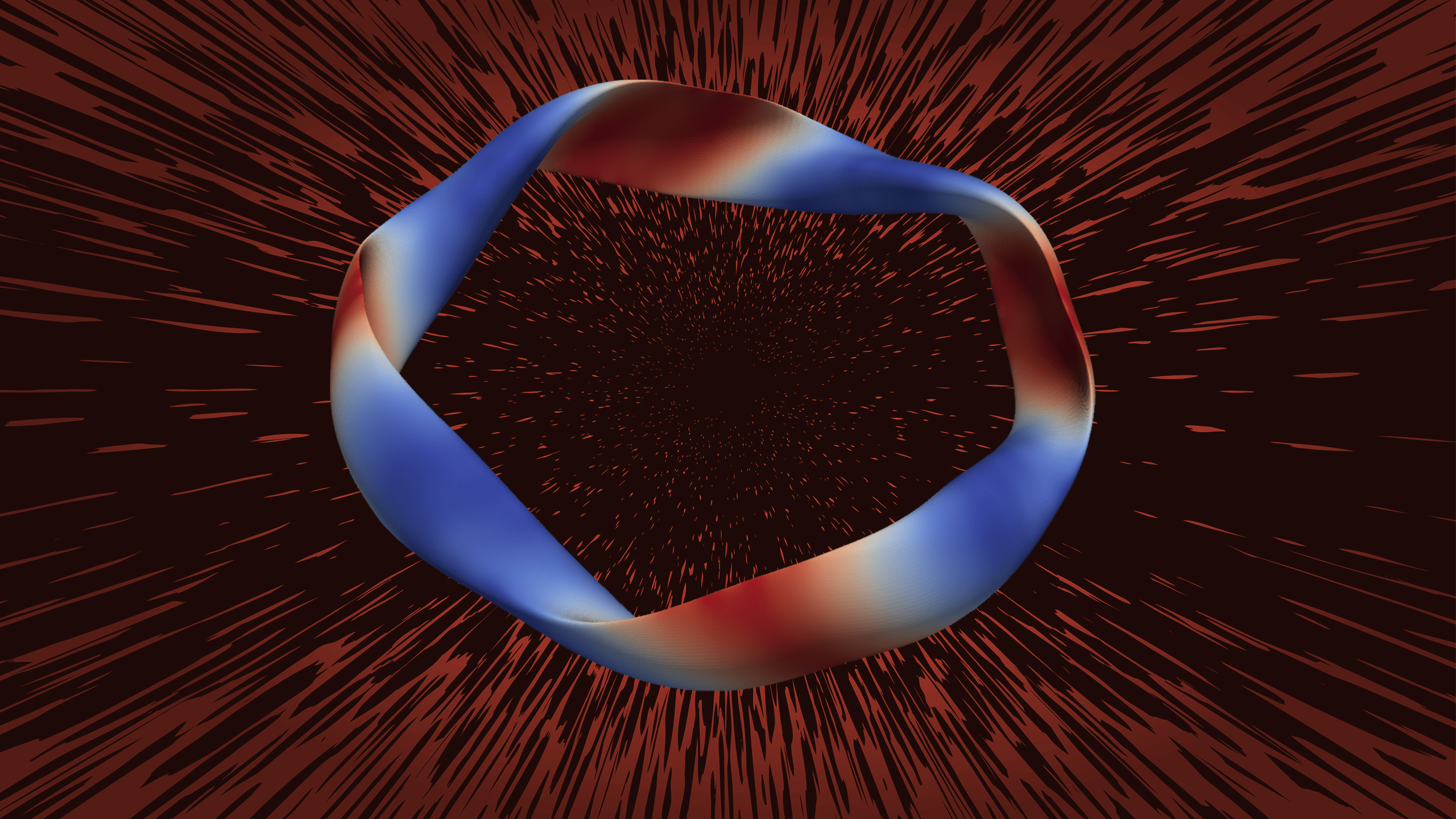
Type One Energy used ORNL’s Summit supercomputer to develop an optimized stellarator fusion power plant concept. Colors indicate the strength of the magnetic field that confines the plasma. Credit: Type One Energy
Type One Energy Group is designing a next-generation stellarator fusion device using large-scale simulations on ORNL’s Summit supercomputer. Targeting a prototype by 2030 and a 350-MW pilot plant by the mid-2030s, the team used Summit to optimize the device’s 3D shape, reduce plasma turbulence, and validate a first-of-its-kind commercial-scale design. High-fidelity GX turbulence simulations cut development time by more than a year and improved performance predictions at extreme temperatures. With results published in the Journal of Plasma Physics, the team will now refine the design using Frontier, Summit’s exascale successor, as it advances toward practical fusion energy.
Accelerating AI with Two New Supercomputers
The U.S. Department of Energy introduced two new supercomputers—Discovery and Lux—at Oak Ridge National Laboratory to advance AI-driven science, national security, and next-generation innovation. Developed with AMD, HPE, and Oracle Cloud Infrastructure, the systems will provide powerful AI-accelerated capabilities for breakthroughs across energy, medicine, aerospace, cybersecurity, and more. Arriving in 2028, Discovery will exceed the performance of ORNL’s Frontier with next-generation AMD processors and a DAOS-based storage system, enabling faster data generation, simulation, and AI training. Lux, built on AMD’s newest AI technologies, will support large-scale AI training and distributed inference. Together, they mark a major step forward in high-performance computing and extend ORNL’s leadership in HPC, AI, and emerging quantum technologies.
Winning Best Paper Award
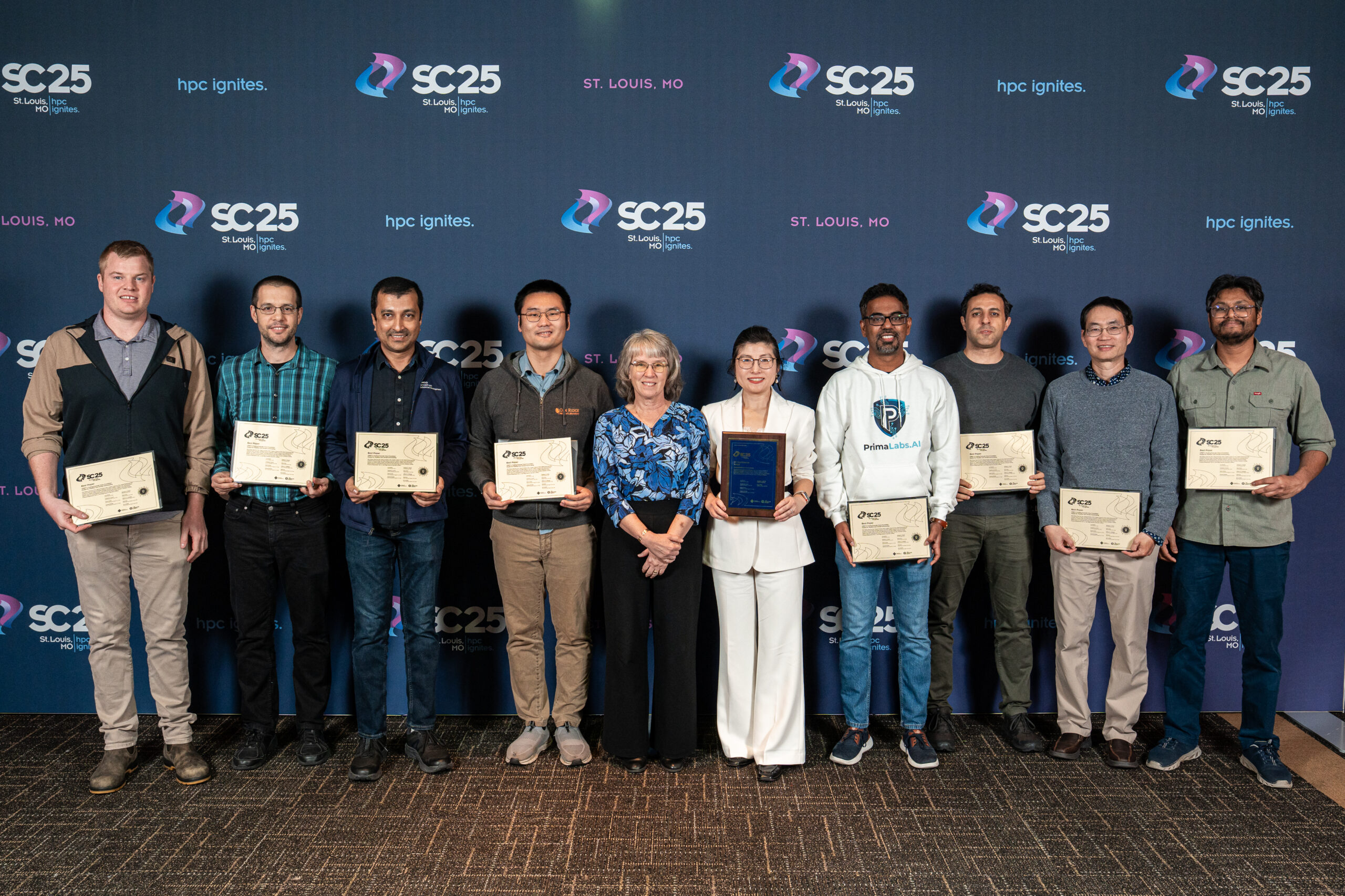
ORNL’s ORBIT team won the Best Paper Award for ORBIT-2 at SC25.
Researchers at Oak Ridge National Laboratory used Frontier to dramatically expand and improve ORBIT-2, the world’s largest AI model for weather prediction. By training on Frontier’s 2-exaflop HPE Cray EX system, the team pushed past previous computational limits to deliver near-instant, doorstep-level forecasts with roughly 99% accuracy, achieving in milliseconds what once required days on large supercomputers. This breakthrough in ultra-high-resolution, AI-driven weather modeling earned the ORBIT-2 team a Gordon Bell nomination along with the Best Paper Award at Supercomputing 25.
Accelerating Nuclear Licensing with AI
Nuclear power’s growing role in U.S. energy has amplified the need for faster, more efficient reactor licensing, which currently requires sifting through millions of complex documents. To address this, Atomic Canyon partnered with ORNL to train specialized AI models on the Frontier supercomputer, enabling accurate search and analysis far beyond what commercial AI can provide. These open-source models aim to drastically reduce the thousands of staff hours spent navigating decades of technical records, streamline NRC licensing, and support safer, more efficient plant operations nationwide.
The OLCF is a DOE Office of Science user facility.
UT-Battelle manages ORNL for DOE’s Office of Science, the single largest supporter of basic research in the physical sciences in the United States. DOE’s Office of Science is working to address some of the most pressing challenges of our time. For more information, visit https://energy.gov/science.