





by Dawn Levy High energy physicists run on a treadmill that keeps speeding up. Their collider experiments smash particles at dazzling speeds and energies. Detectors identify and track the multitudes of smaller particles that fly out. With powerful new colliders crashing particles at ever-increasing energies, even more daughter particles are…
Last fall, as the finalists for the Association for Computing Machinery’s 2024 Gordon Bell Prize were waiting to hear their names called, researchers at the Department of Energy’s Argonne and Oak Ridge National Laboratories had just finished running the largest astrophysical simulation of the universe ever conducted — and now, it…
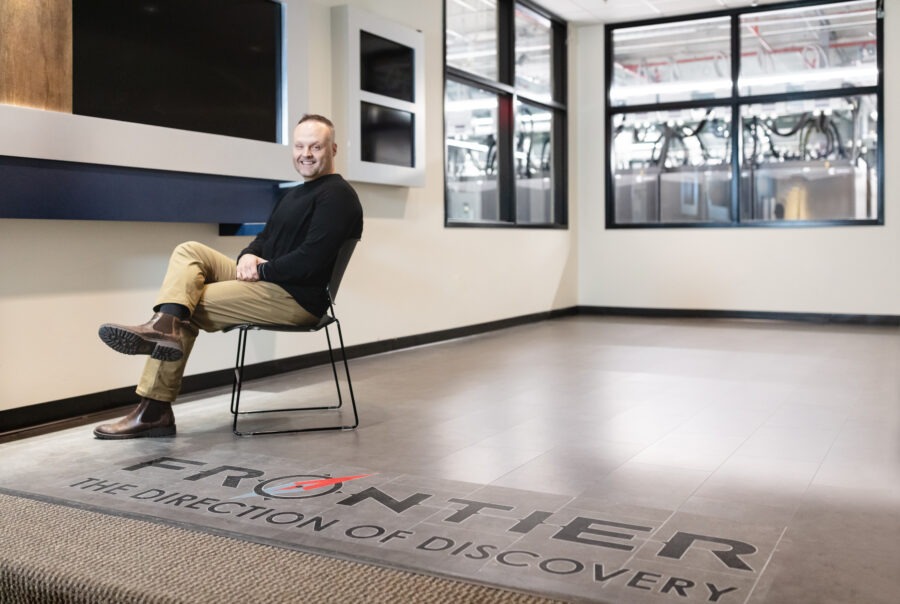
Bronson Messer is the Director of Science at the Oak Ridge Leadership Computing Facility. Credit: Carlos Jones/ORNL, U.S. Dept. of Energy Bronson Messer, a distinguished staff scientist at the Department of Energy’s Oak Ridge Leadership Computing Facility (OLCF) at Oak Ridge National Laboratory, has been named a Fellow of the…
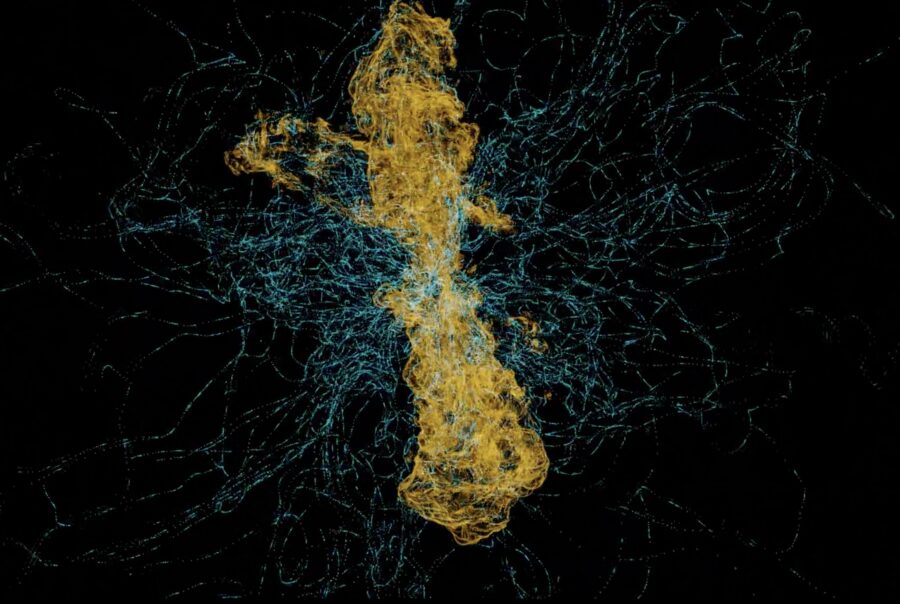
To probe the mysteries of how galaxies evolve over time, scientists needed a supercomputer with out-of-this-world computational power. The results of a study conducted on the Frontier supercomputer at the Department of Energy’s Oak Ridge National Laboratory offer the clearest portrait so far of how some galaxies regulate the energy produced by supermassive black…
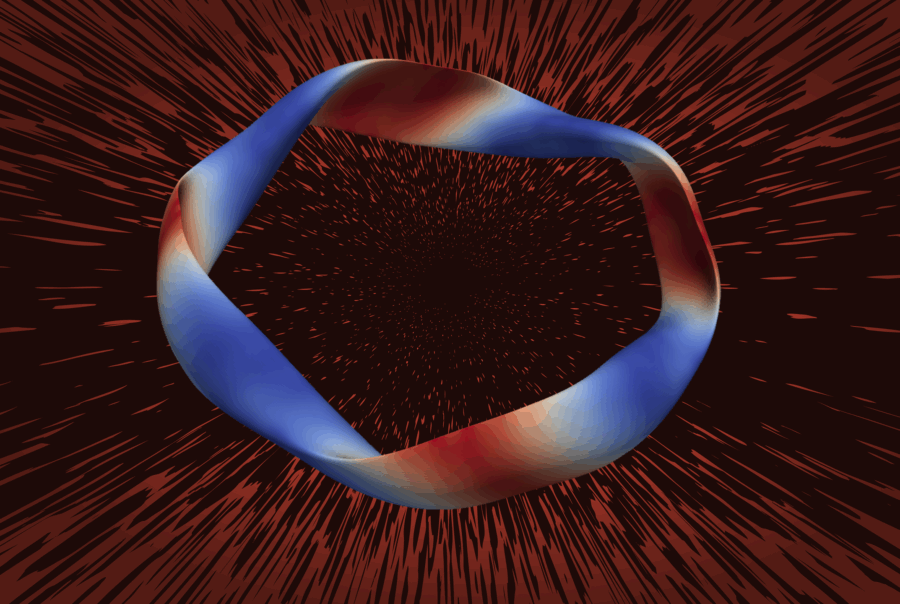
The nuclear reactions that fuel the sun could soon be harnessed to generate electricity on Earth — with help from supercomputers at the Department of Energy’s Oak Ridge National Laboratory. Type One Energy Group, a Knoxville-based startup, expects to build the world’s most advanced stellarator fusion device by 2030, with a pilot…
For astrophysicists, neutron stars stand out as objects of irresistible fascination — perhaps, in part, because of how difficult they are to decipher. But calculations conducted on the Frontier supercomputer, located at the Department of Energy’s Oak Ridge National Laboratory, have revealed new clues about the inner workings of neutron…
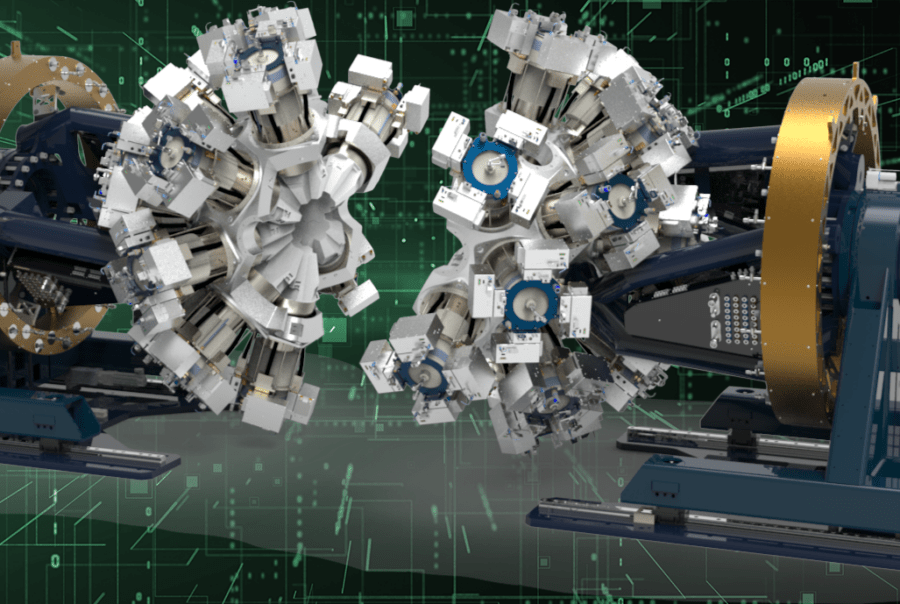
Analyzing massive datasets from nuclear physics experiments can take hours or days to process, but researchers are working to radically reduce that time to mere seconds using special software being developed at the Department of Energy’s Lawrence Berkeley and Oak Ridge national laboratories. DELERIA — short for Distributed Event-Level Experiment…
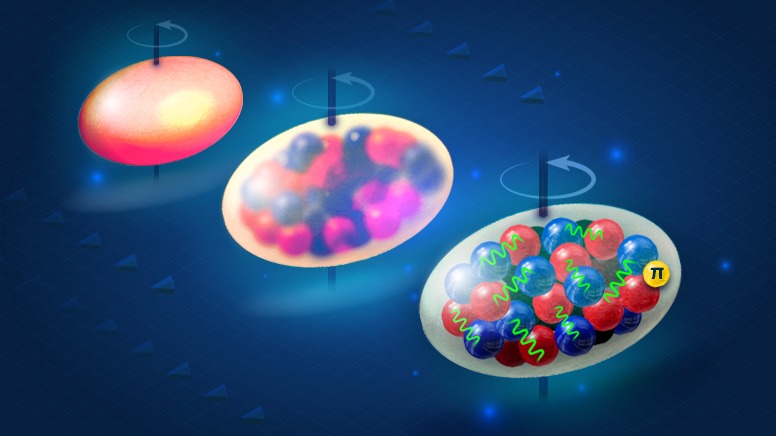
by Chris Driver Using a novel computational modeling technique to test theoretical quantum physics, a team of researchers at the Department of Energy’s Oak Ridge National Laboratory have discovered properties of the atomic nucleus at new levels of detail — illuminating behavior of its protons and neutrons amid fundamental forces…
Leadership-class supercomputers dedicated to open science are not built to last forever. In fact, they have a limited lifespan by design. No matter how powerful they may be on launch day, advancements in computing technology and changing computing needs will push them closer to obsolescence with each passing year until…
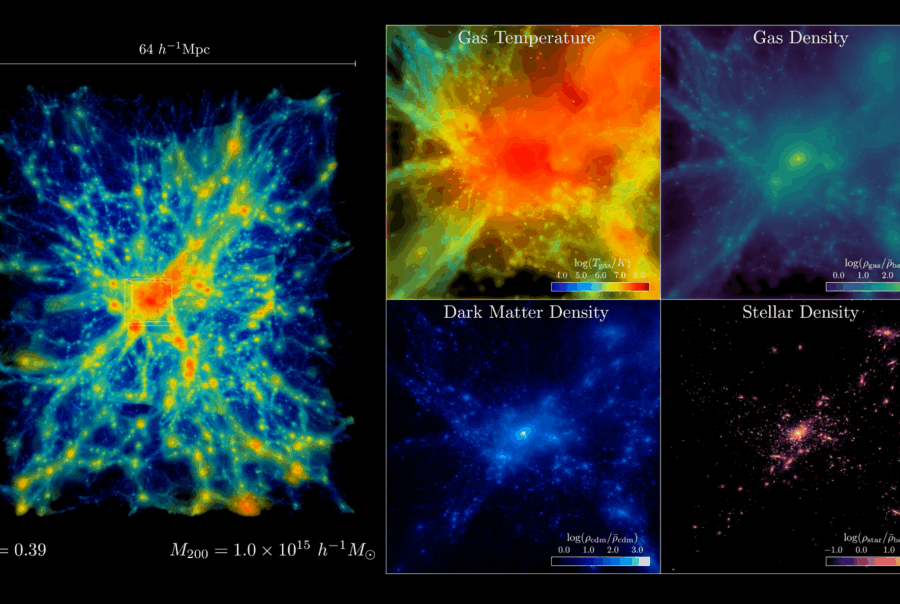
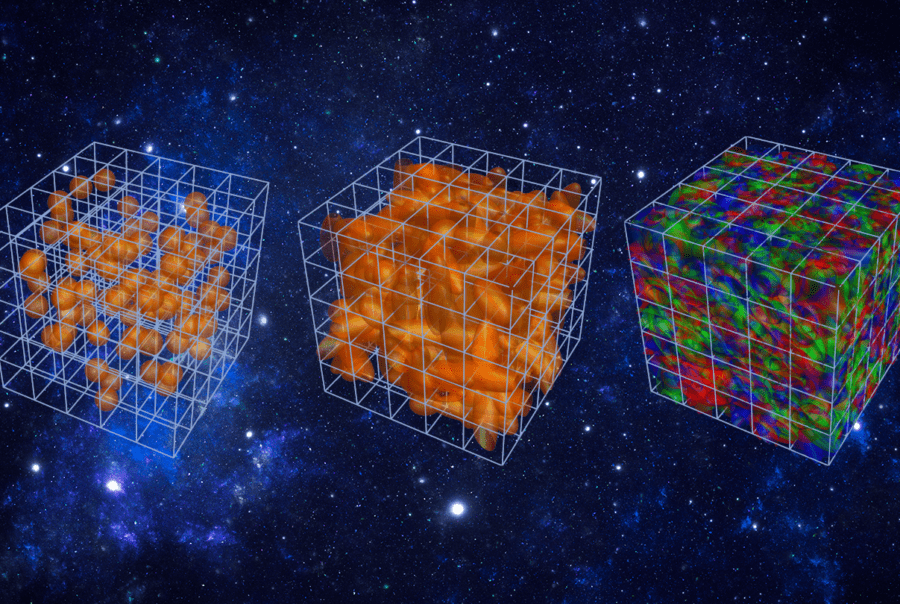
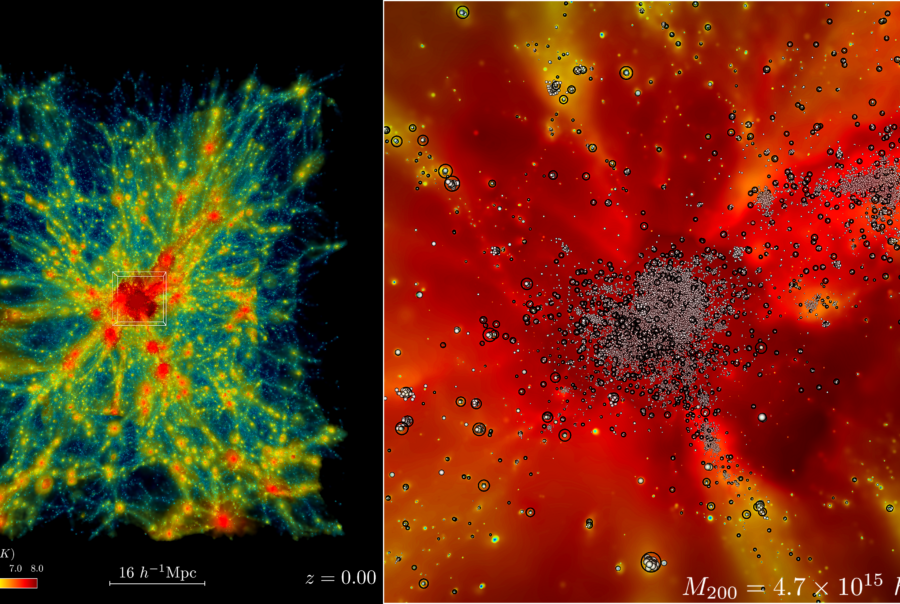
The universe just got a whole lot bigger — or at least in the world of computer simulations, that is. In early November, researchers at the Department of Energy’s Argonne National Laboratory used the fastest supercomputer on the planet to run the largest astrophysical simulation of the universe ever conducted.…
Nuclear fission — when the nucleus of an atom splits in two, releasing energy — may seem like a process that is fully understood. First discovered in 1939 and thoroughly studied ever since, fission is a constant factor in modern life, used in everything from nuclear medicine to power-generating nuclear…
The nucleus of an atom is almost inconceivably small, and most people have little idea just how much of the world around them is shaped by the strong nuclear forces that hold those tiny subatomic particles together. Nuclear physicists at the Department of Energy’s Oak Ridge National Laboratory recently used…
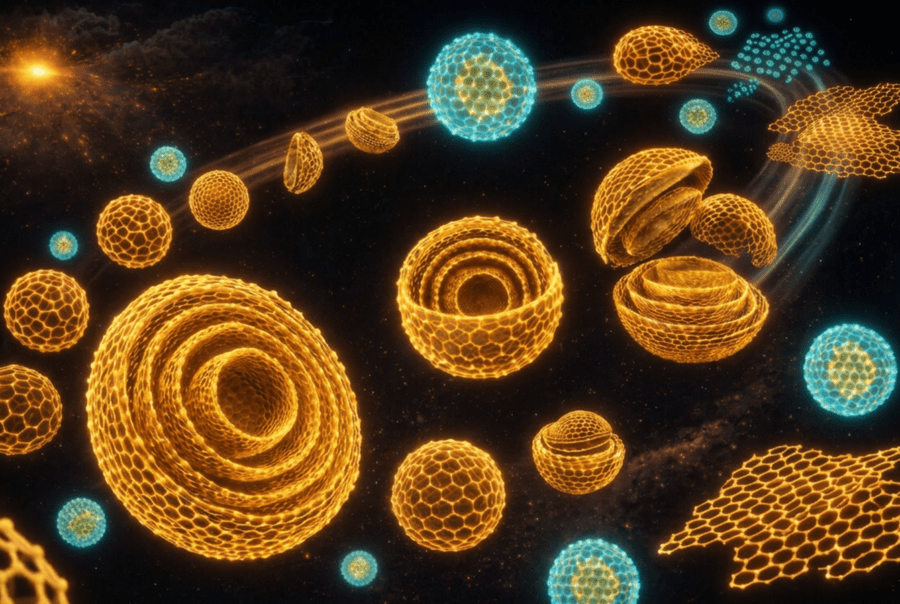
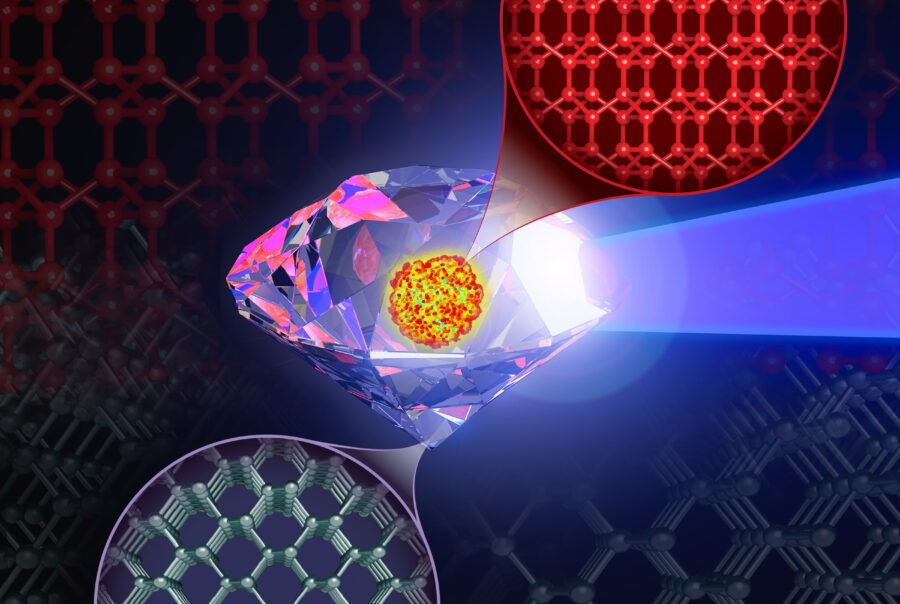
The world’s fastest supercomputer helped researchers simulate synthesizing a material harder and tougher than diamond — or any other substance on Earth. The study used Frontier, the HPE Cray EX supercomputing system at the Department of Energy’s Oak Ridge National Laboratory, to predict the likeliest strategy to synthesize such a…
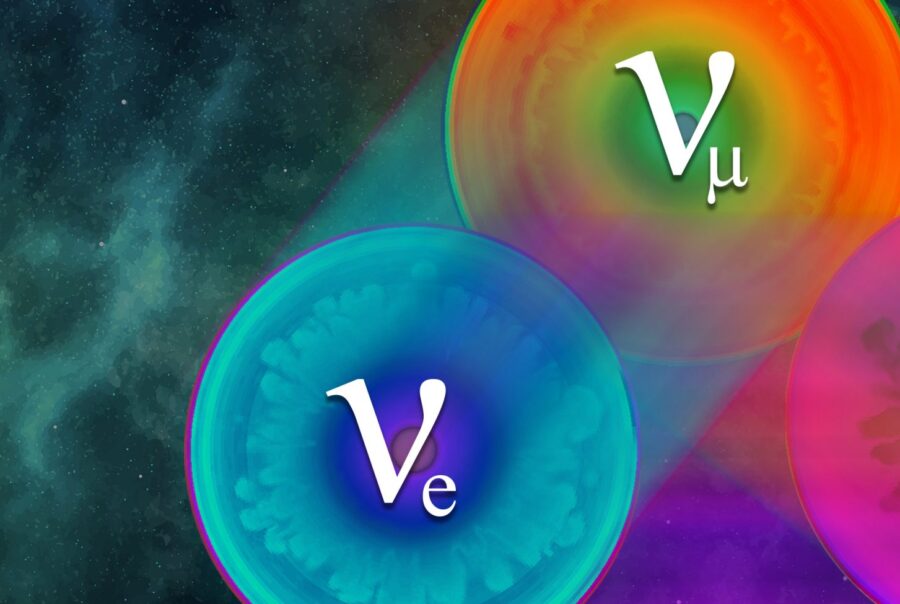
Researchers used quantum simulations to obtain new insights into the nature of neutrinos — the mysterious subatomic particles that abound throughout the universe — and their role in the deaths of massive stars. The study relied on support from the Quantum Computing User Program, or QCUP, and the Quantum Science Center, a national Quantum Information…
Understanding how a thermonuclear flame spreads across the surface of a neutron star — and what that spreading can tell us about the relationship between the neutron star’s mass and its radius — can also reveal a lot about the star’s composition. Neutron stars — the compact remnants of supernova…